- Free Shipping over $150 USD / $200 CAD
5,000+ Reviews
5,000+ Reviews
Shop Western leather belts in tooled, beaded, buckstitch and painted styles, with removable buckles and a variety of sizes. Find sizing guidance to help choose the right fit. Ranch Hand is a family-owned Western lifestyle brand with locations in Alberta, Canada and Arizona, USA.
Showing all 13 resultsSorted by popularity
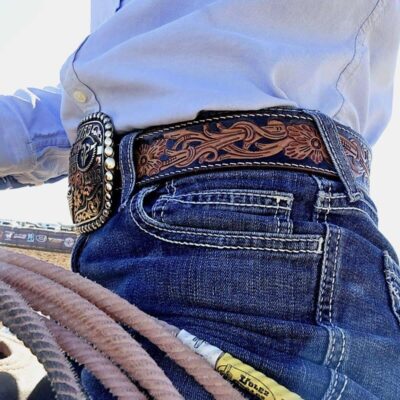
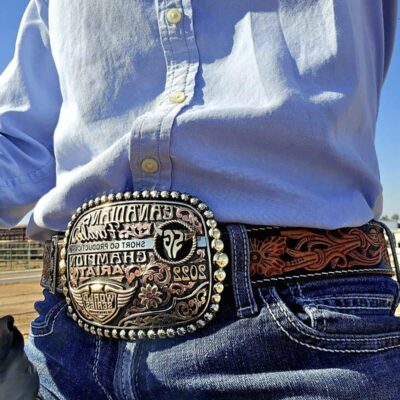
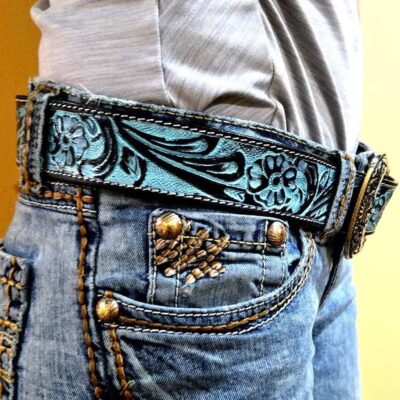
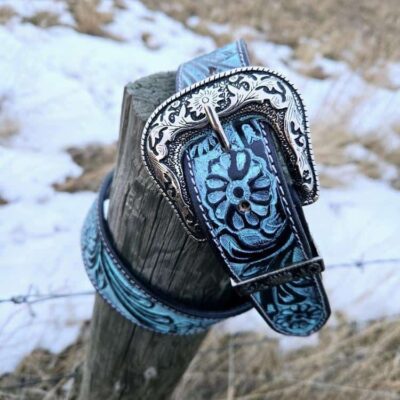
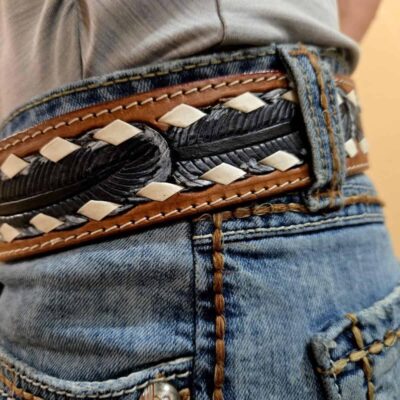
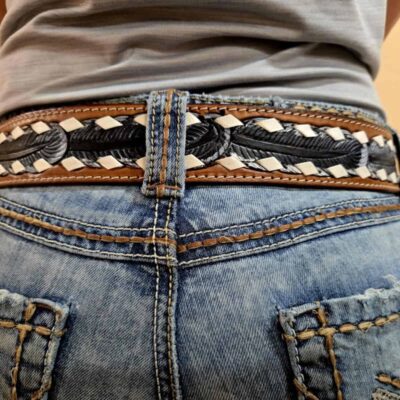
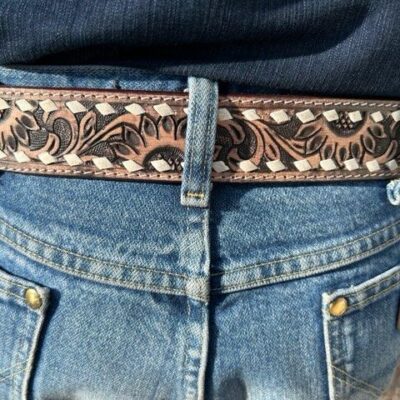
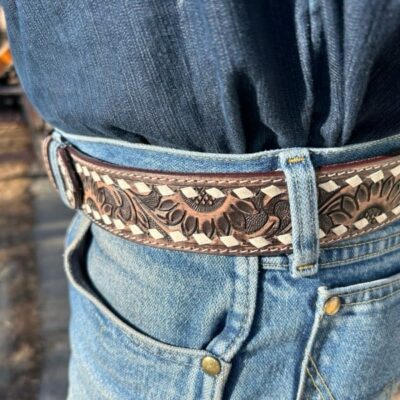
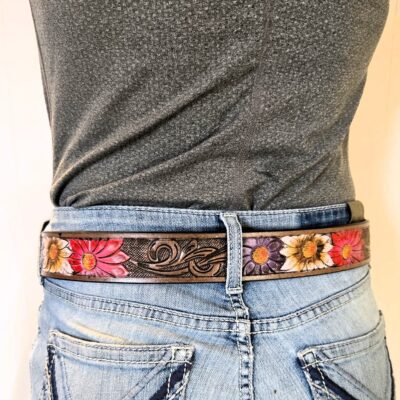
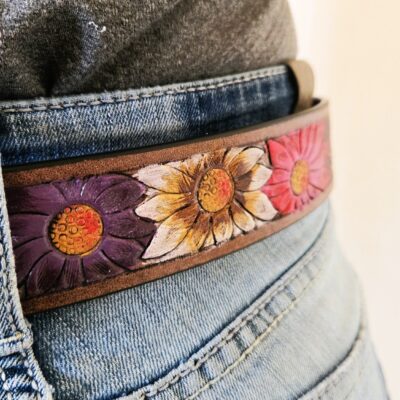
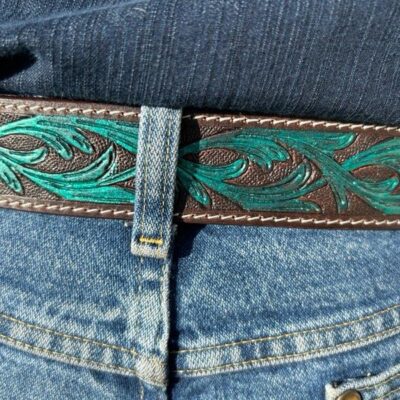
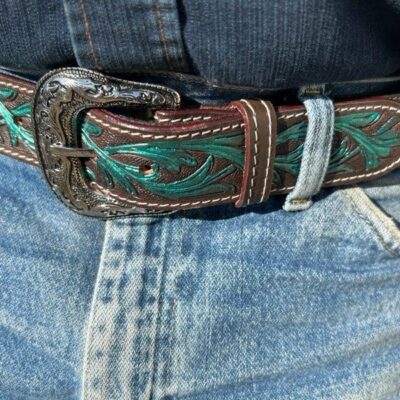
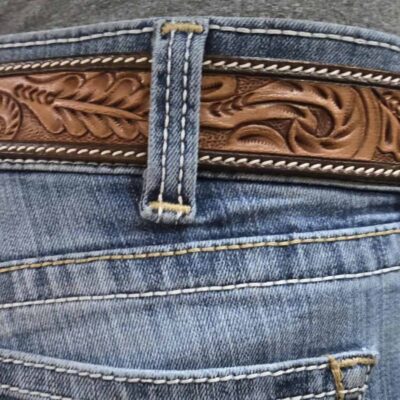
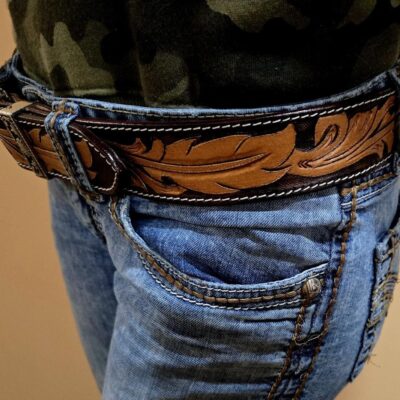
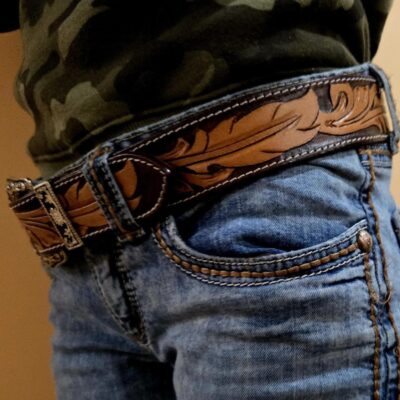
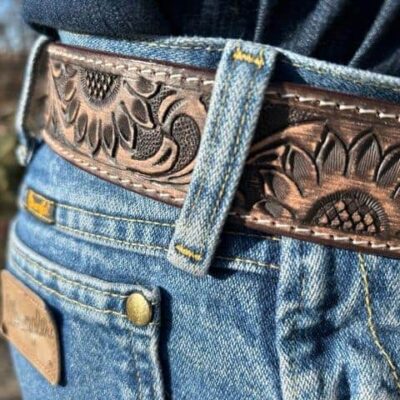
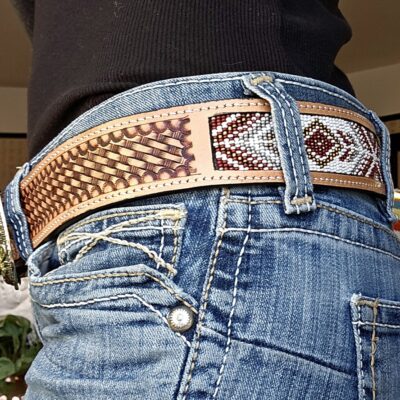
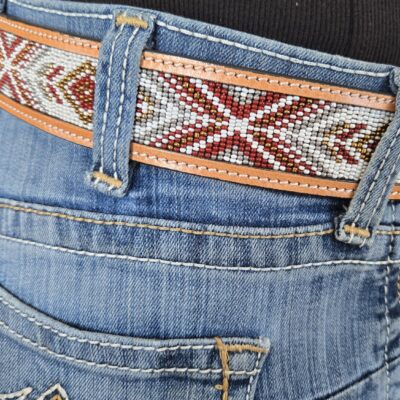
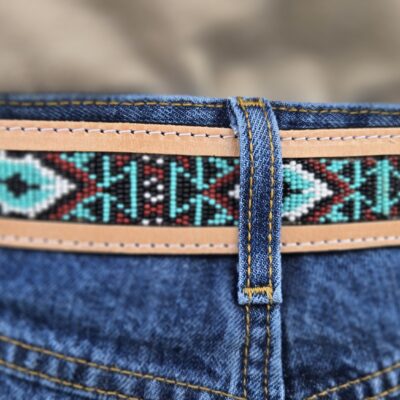
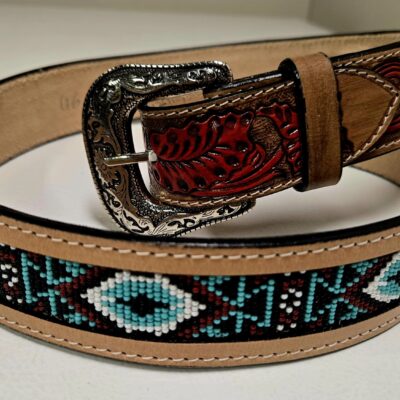
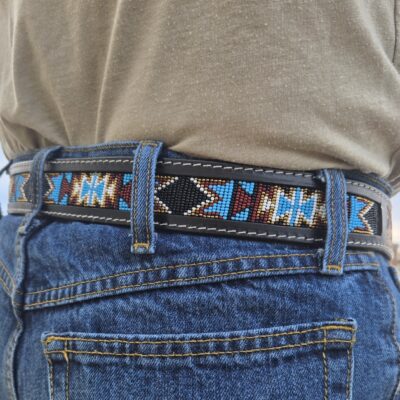
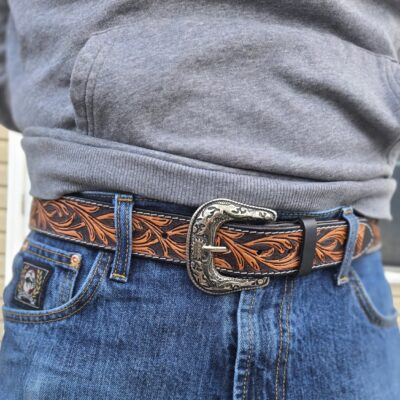
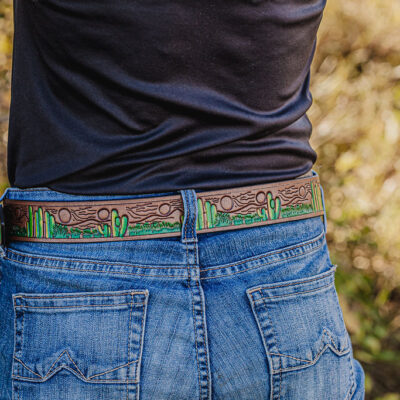
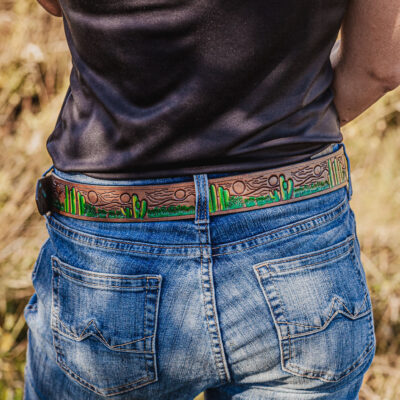
A quick guide to our tooling, beadwork and buckle styles — so you can pick the right belt with confidence.
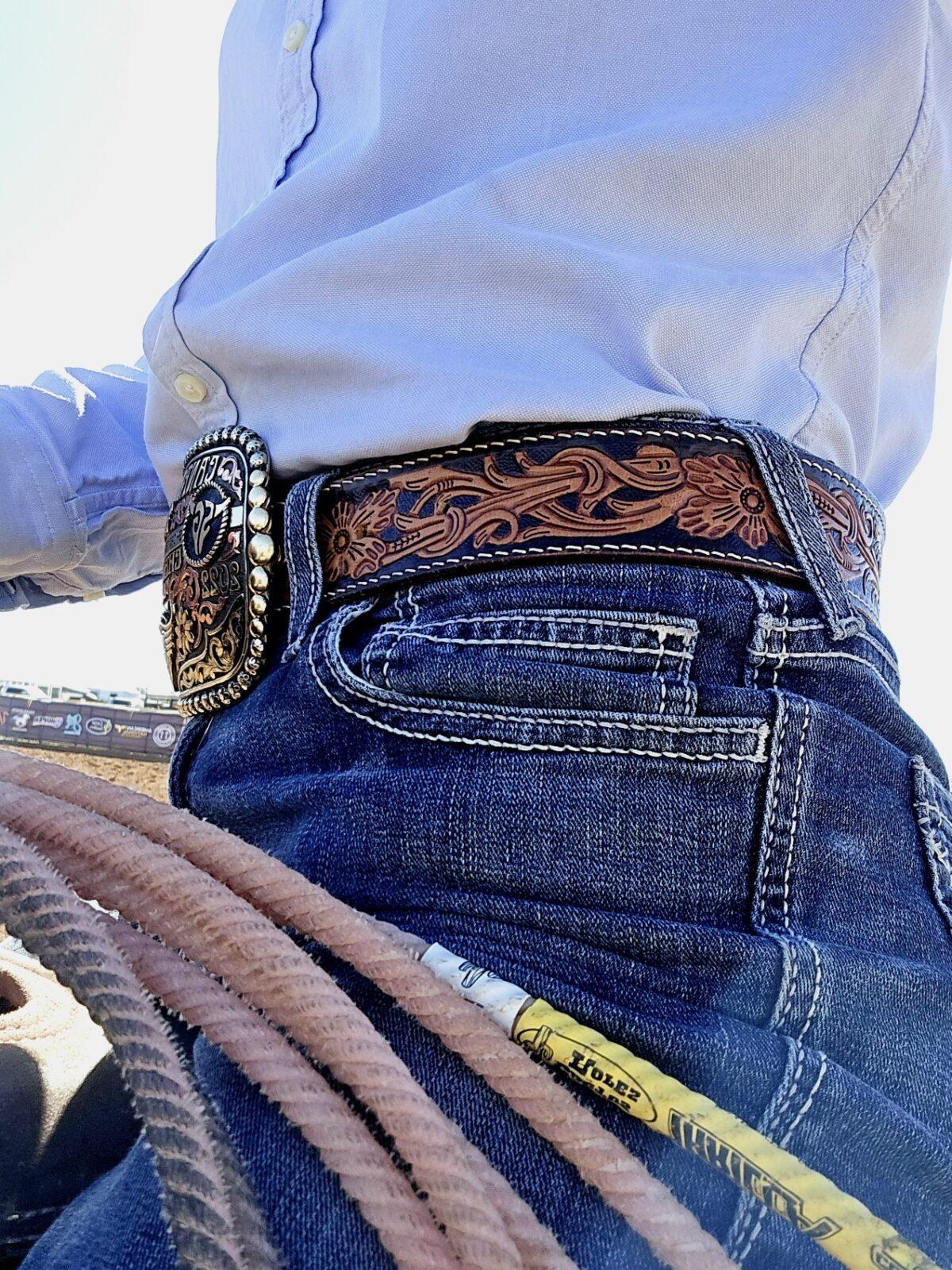
Classic Western tooling cut by hand into full-grain leather — floral, feather, basketweave and scenic patterns. The carving is done on the hide itself, so the pattern deepens and gains contrast as the belt ages. Our most popular everyday style.

Hand-beaded panels set into the leather in bold Southwest patterns. Each row of beadwork is laid by hand, which is why no two belts are identical. A statement belt for the show pen, the dance floor or a night in town.
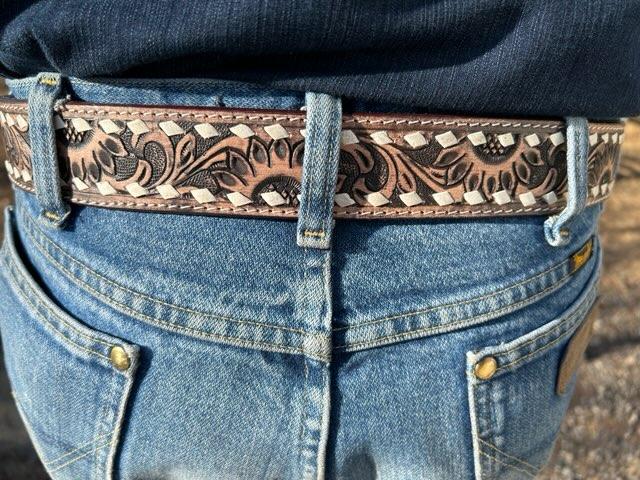
Traditional buckstitch lacing runs the length of the strap in contrasting white, red or turquoise. It is a working-cowboy detail that adds strength along the edge as well as colour — understated from a distance, sharp up close.
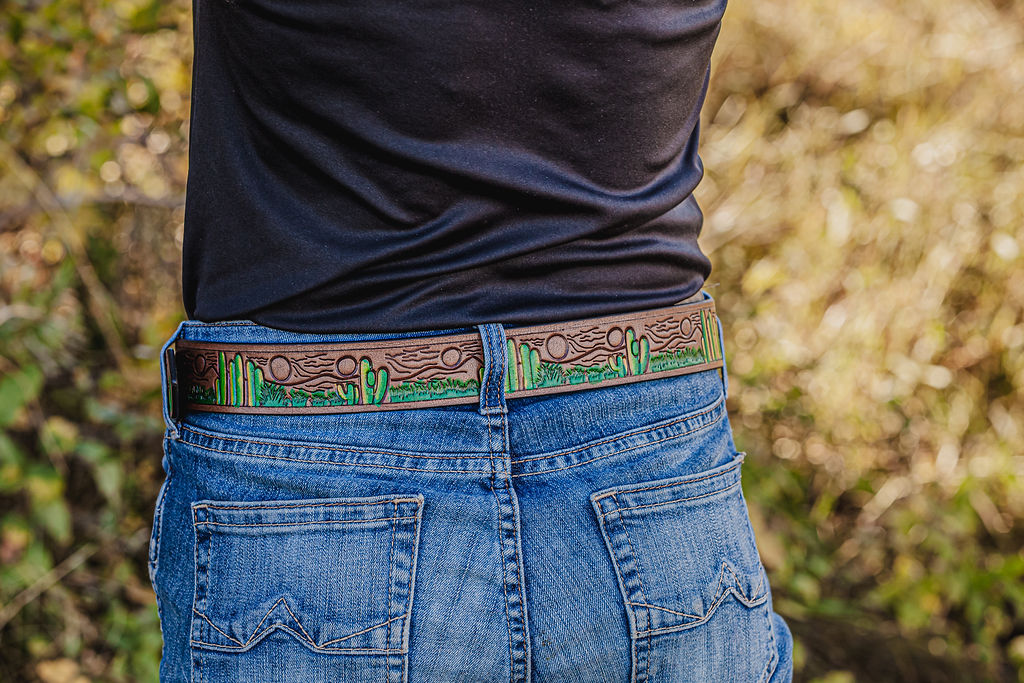
Hand-painted desert, cactus and wildflower scenes on tooled leather. The paint is worked into the carved pattern and sealed, so the artwork wears in with the leather rather than sitting on top of it.
The most reliable method: measure a belt you already wear. Lay it flat and measure from the fold at the buckle end to the hole you use most often. That measurement is your belt size, and it works no matter what you wear in jeans.
No belt handy? Start from your pant waist size. Most riders wear a belt about two inches longer than their pant size, because a belt sits over jeans, a tucked shirt and sometimes a buckle.
Check the size dropdown. Every Ranch Hand belt lists its length on the product page, and each strap is punched with five holes — giving you roughly two inches of adjustment either side of the stated size.
Between two sizes? Go up. A belt that runs slightly long can be trimmed and re-punched; one that runs short cannot be added to.
Still not sure? Send us the measurement from your current belt and we will tell you exactly which size to order. It takes a minute and saves the hassle of a return.
Every belt is made with a snap-off buckle at the billet end, so you can swap hardware in seconds without tools. Unsnap the fasteners, slide the old buckle off the strap, slide the new one on and snap it closed.
That means one strap can wear a plain ranch buckle for work and a trophy or silver buckle for the weekend — and if you already own a buckle you love, our belts are cut to standard widths so it will fit.
If a snap ever works loose from hard wear, press it firmly closed with a pair of pliers wrapped in a cloth; the fasteners are replaceable rather than a reason to retire the belt.
Full-grain leather wants very little: keep it dry, keep it clean, and feed it occasionally.
Wipe dust and sweat off with a dry cloth after long days. If the belt gets soaked, let it dry naturally at room temperature — never on a heater or in direct sun, which is what makes leather go stiff and crack.
Two or three times a year, work a small amount of leather conditioner or saddle soap in with a soft cloth and let it absorb. Go sparingly on tooled and painted belts so the conditioner does not pool in the carved lines.
Store the belt hanging or rolled loosely rather than folded, and expect the colour to deepen with wear — that patina is the leather doing exactly what it should.
Measure a belt you already wear from the fold at the buckle to the hole you use most — that number is your belt size. If you are going off jeans instead, most riders take a belt about two inches larger than their pant size. Every belt lists its length in the size options, and five holes give you around two inches of adjustment either way.
Order the larger size. A belt that runs a little long can be trimmed and re-punched by us or any leather shop, but a belt that comes up short cannot be lengthened.
Yes. Every belt has a snap-off buckle, so you can swap it in seconds without tools — a plain ranch buckle for work, a trophy or silver buckle for the weekend. Our straps are cut to standard widths, so buckles you already own will fit.
We use full-grain leather — the strongest part of the hide, not a split or bonded layer. It will soften and darken into a patina with wear, but it will not stretch out the way a bonded-leather belt does.
Wipe it down with a dry cloth, let it dry naturally if it gets wet, and condition it lightly two or three times a year. Go easy with conditioner on tooled and painted belts so it does not pool in the carved lines, and store the belt hanging or loosely rolled rather than folded.
Orders are processed in 1-4 business days and ship across Canada and the USA, with free shipping over $150 USD / $200 CAD. Full-price items can be returned within 30 days in new, unused condition — and if you are unsure about sizing before you order, message us your measurement and we will confirm the right size.
Leather Western Belts are more than just something to keep your pants up. They tell a story. A…
Read the guide →
Choosing the right collar for your dog is essential for their comfort, safety, and style. Among the various…
Read the guide →